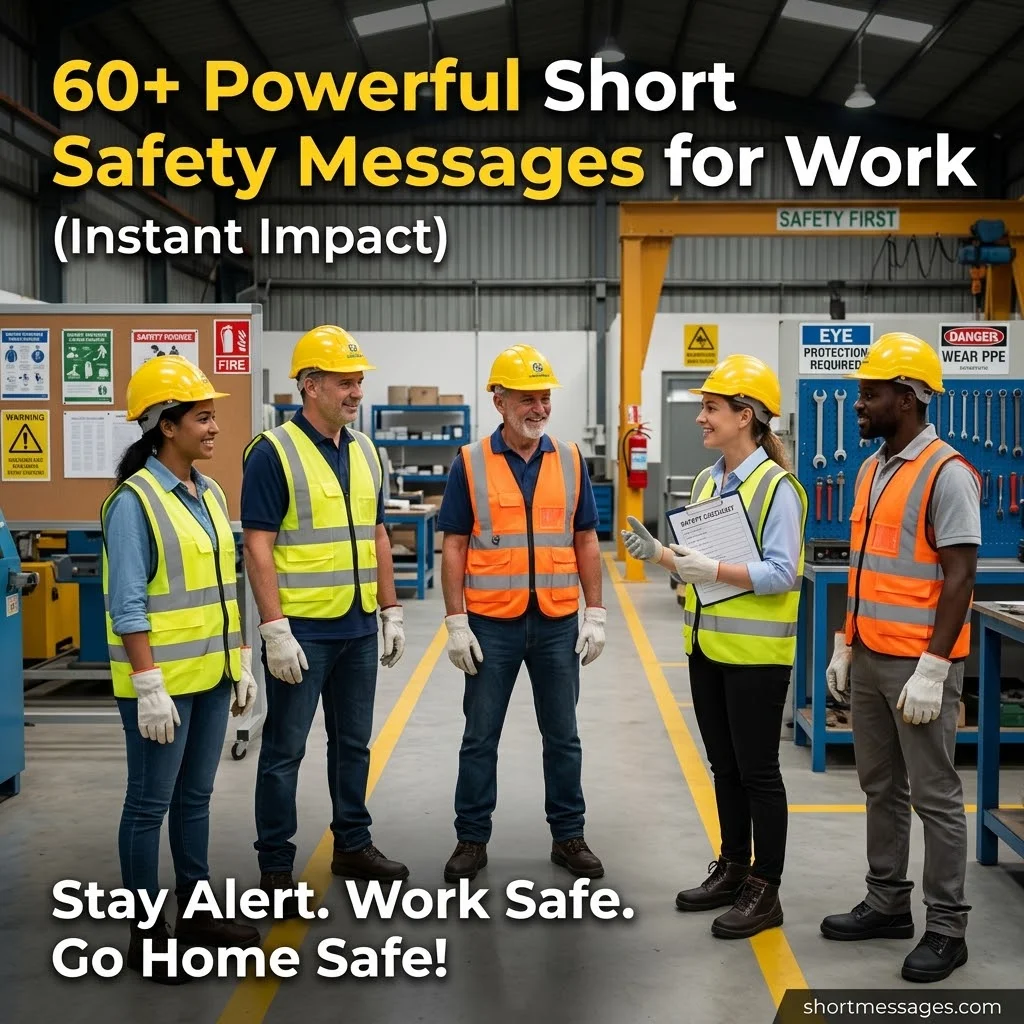
One bad habit can cause an injury in seconds. One clear reminder can stop it. These short safety messages for work are easy to read, easy to remember, and ready to use today.
Below you’ll find 60 workplace safety reminders you can copy and share. You’ll also learn how to use them in a toolbox talk, a team chat, or a safety message of the day.
Table of Contents
Why Short Safety Messages for Work Matter
Short messages stick. They take seconds to read, and people can act on them right away.
A short safety message is a one-line reminder that names one hazard and one safe action. That’s all it takes.
Even in a safety-focused workplace, clear communication matters just as much as following safety rules. If you want to make everyday workplace conversations easier and respond to messages more effectively, explore these AI tools for writing clear text message replies that help you find the right words in seconds.
The numbers show why this matters:
- The U.S. Bureau of Labor Statistics recorded 5,070 fatal work injuries in 2024, down 4.0% from 5,283 in 2023.
- Private employers reported about 2.5 million nonfatal injuries and illnesses in 2024.
- BLS data shows that falls, slips and trips caused 844 deaths in 2024. Roadway incidents caused 1,146.
Many of these cases start with a small lapse, like a rushed step, a skipped PPE check, or an ignored spill. A quick reminder at the right moment can break that chain.
Good daily safety messages share a few traits:
- They use plain words.
- They name one clear action.
- They sound like a coworker talking, not a rule book.
60 Short Safety Messages for Work
Pick one for your next shift huddle, or post a few where your team will see them. Each message is ready to copy.
For general workplace safety:
Stop for ten seconds and scan your area before you start.
A safe job is a finished job. Never trade safety for speed.
If you see a hazard, own it. Fix it or flag it.
Ask before you guess. A quick question beats a long recovery.
Safety starts with you and spreads to your whole crew.
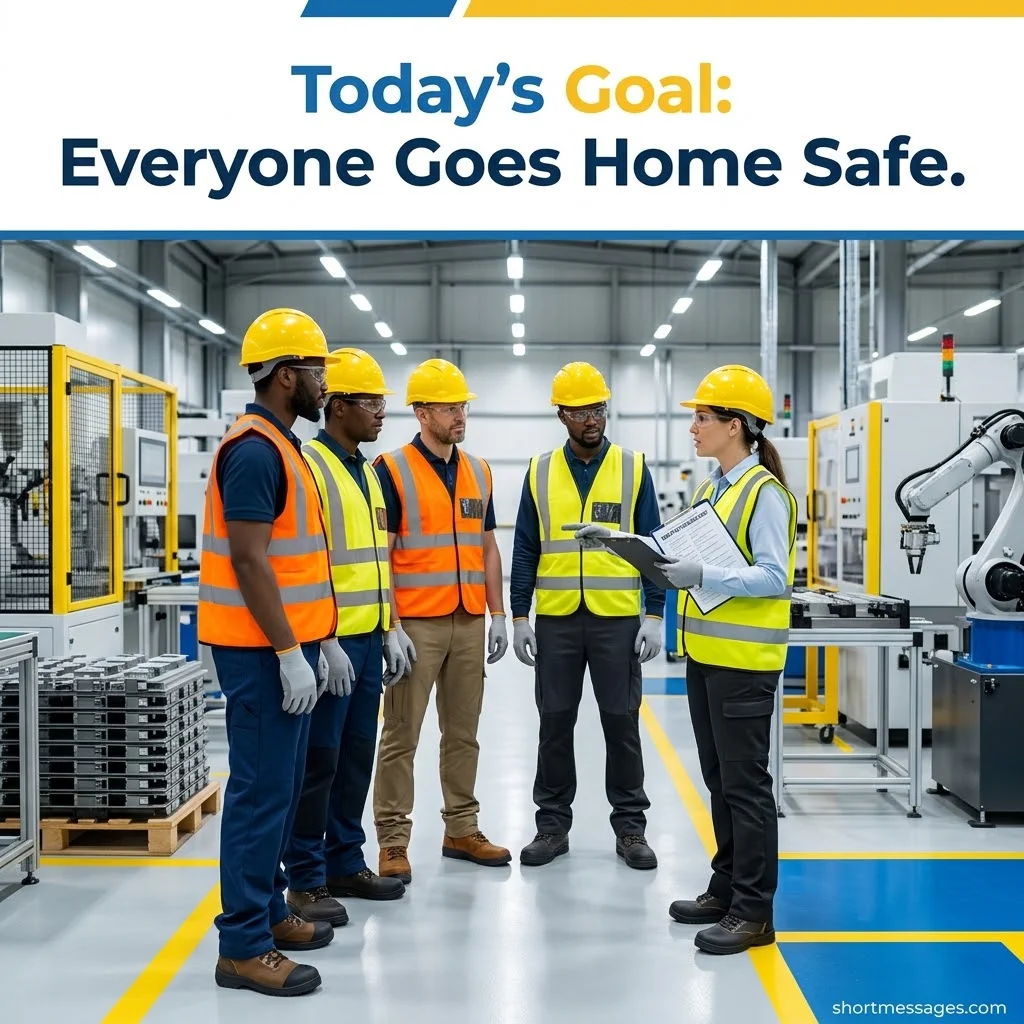
Today’s goal is simple: everyone goes home the way they came in.
No task is so urgent that it can’t be done safely.
Good habits protect you when you are tired, rushed, or distracted.
For personal protective equipment (PPE):
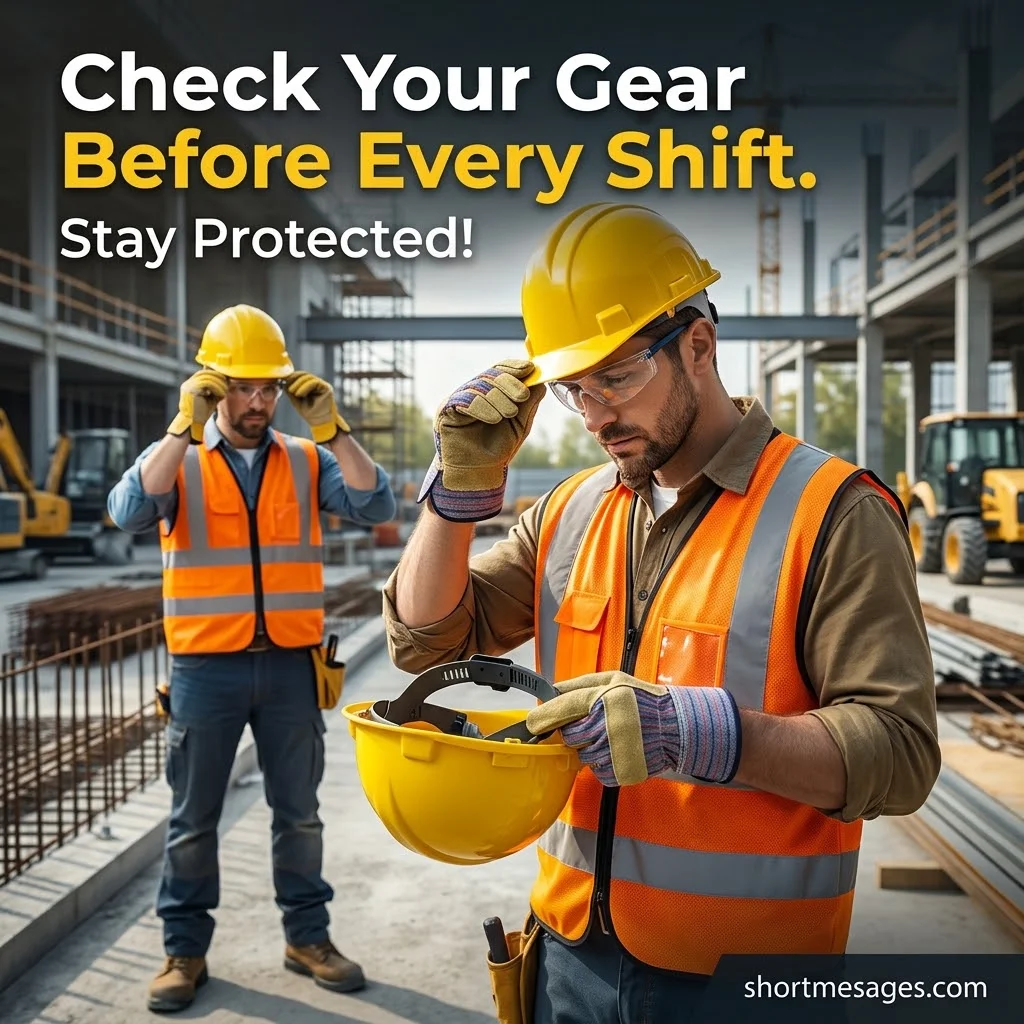
Check your gear before every shift. A cracked hard hat protects no one.
Safety glasses only work when they are on your face.
Pick gloves that match the job, not just the pair within reach.
Steel-toe boots keep heavy things from ruining your day. Wear them.
Hearing protection is cheap. Hearing loss is permanent.
If your PPE is damaged, swap it out before you start.
For slips, trips, falls, and housekeeping:
Wipe up spills the moment you see them.
Keep cords, boxes, and tools out of walkways.
Walk, don’t run. The clock can wait.
Use the handrail on every staircase, every time.
Wet floor sign up? Slow down and watch your step.
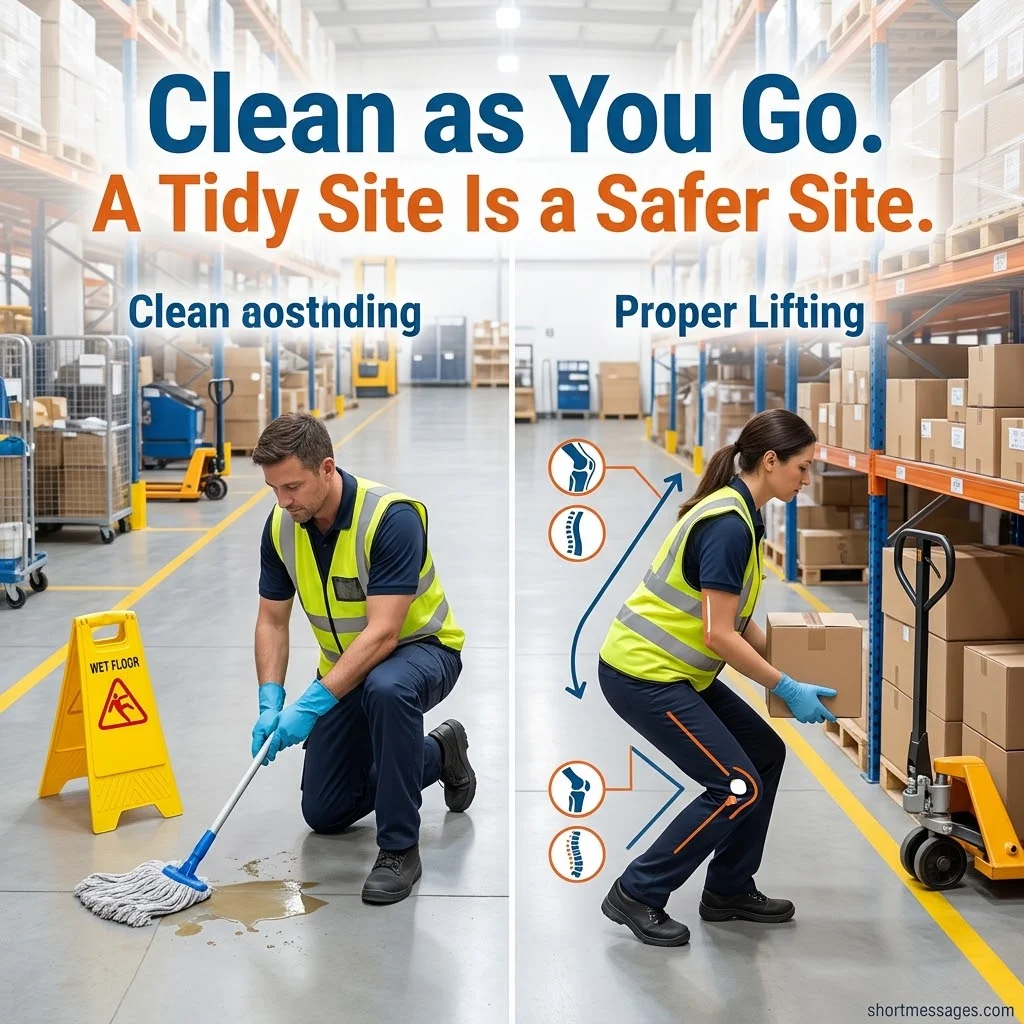
Clean as you go. A tidy site is a safer site.
For lifting and ergonomics:
Bend your knees, keep the load close, and lift smoothly.
Too heavy? Grab a cart, a lift, or a teammate.
Turn with your feet, not your spine.
Set your screen at eye level and keep your feet flat on the floor.
Stretch for two minutes. Your back will thank you at 5 p.m.
For electrical and fire safety:
Treat every wire as live until it is proven safe.
Never overload an outlet or daisy-chain power strips.
Frayed cord? Tag it and take it out of service.
Keep water and electrical tools far apart.
Know where the nearest fire exit and extinguisher are before you need them.
Keep exit paths clear. Always.
Store flammables in approved cabinets, away from heat.
For tools and machinery:
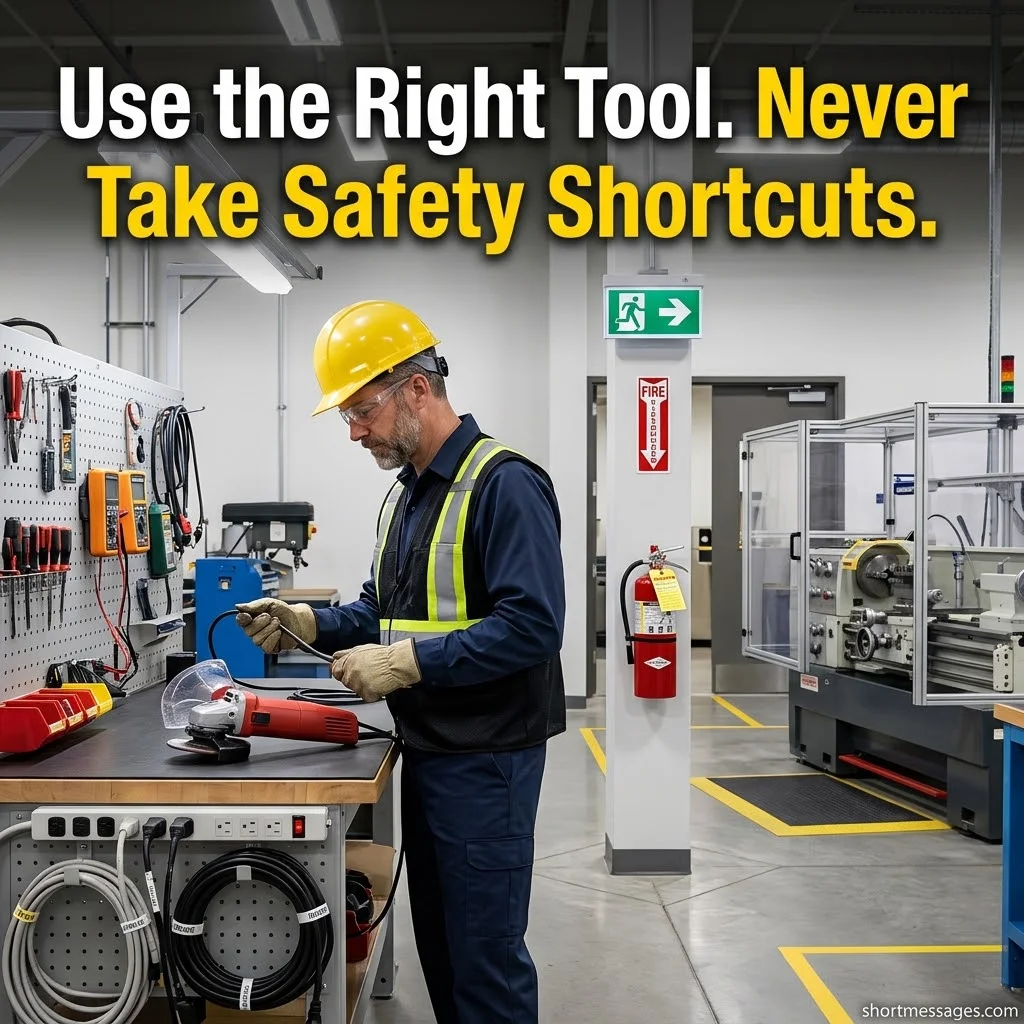
Use the right tool for the job. Never improvise.
Guards stay on. No exceptions, no shortcuts.
Lock out and tag out before you service any machine.
Skip loose sleeves, dangling jewelry, and untied hair near moving parts.
If you haven’t been trained on a tool, don’t touch it.
Inspect your equipment before each use and report anything that seems off.
For hazard and near-miss reporting:
A near miss is a free warning. Report it.
See something unsafe? Say something right away.
Speaking up isn’t complaining. It’s protecting your team.
Report every injury, even a small one. Small cuts can turn serious.
If a task feels unsafe, stop and ask for help.
Fix the cause, not just the mess. Tell your supervisor what you found.
For driving and vehicle safety:
Phone down, eyes up. Every call can wait.
Buckle up before you shift into gear.
Walk around the vehicle before you back up.
Slow down near loading docks and blind corners.
For heat, cold, fatigue, and mental wellbeing:
Drink water before you feel thirsty.
Take your breaks. Tired workers make costly mistakes.
Dizzy or confused in the heat? Get to shade and tell someone now.
In the cold, dress in layers and keep your hands and feet dry.
Feeling overwhelmed? Talk to someone. Mental health is part of safety.
Sleep is safety gear too. Show up rested.
For team and safety culture:
Watch out for your teammates the way they watch out for you.
New to the crew? Ask questions. Nobody minds.
Lead by example. People copy what you do, not what you say.
Thank the person who points out a hazard.
Safe work is smart work.
One small habit today can prevent a big injury tomorrow.
How to Share Safety Messages at Work
A good message still needs a good delivery. The best teams share safety talk messages at the same time and place every day.
How do you share a safety message of the day? Pick the channel that fits your team:
- Read one aloud at the start of a shift or pre-start meeting.
- Post it on a board, near a time clock, or on a break room door.
- Send it by email or team chat for office and remote staff.
- Show it on digital screens in warehouses and plants.
Rotate topics so the messages don’t go stale. For example, cover PPE on Monday, housekeeping on Tuesday, and lockout/tagout on Wednesday. Use a near miss or heat topic on Thursday and Friday.
Match the message to the job:
- Construction crews need fall protection and ladder reminders.
- Warehouse teams need forklift and lifting reminders.
- Healthcare teams need hand hygiene and safe patient handling reminders.
- Office teams need ergonomics, cord, and stairway reminders.
You can also write your own quick safety tips for employees in four steps:
- Name one hazard.
- Add one action.
- Use words a new hire would understand.
- Keep it under 15 words.
Encourage your team to speak up. OSHA requires employers to report a work-related fatality within 8 hours. They must report an in-patient hospitalization, amputation, or loss of an eye within 24 hours. You can read the rules on OSHA’s recordkeeping page. Fast reporting starts with workers who feel safe saying, “That doesn’t look right.”
For deeper training, see OSHA’s Safe + Sound campaign and the workplace guides from NIOSH. On hot days, check OSHA’s heat exposure page for heat stress signs and prevention steps.
FAQs
Here are quick answers to the questions workers and managers ask most.
What is a good safety message?
A good safety message is short, clear, and specific. It names one hazard and one action in plain words. It’s positive, easy to say out loud, and easy to remember. “Wipe up spills the moment you see them” is a good example.
What are 5 safety slogans?
Here are five short safety slogans that work well on posters and boards: “Safety doesn’t happen by accident.” “Think safe, work safe, go home safe.” “Safety first, safety always.” “If it’s not safe, don’t do it.” “Your safety starts with you.”
What is a good safety quote for work?
A strong one is: “Safety is not a rule you follow. It is a choice you make every shift.” It’s short, it’s about action, and it puts the choice in each worker’s hands.
What are the 7 safety tips?
These seven workplace safety tips cover most daily risks:
- Wear the right PPE for the job.
- Keep your work area clean and clear.
- Report hazards and near misses right away.
- Use tools and machines only as trained.
- Lift with your legs and ask for help with heavy loads.
- Learn your exits, alarms, and first aid kit locations.
- Take breaks, drink water, and rest well.
Conclusion
Short safety messages for work are simple, fast, and powerful. They remind people to pause, think, and act safely.

Founder & Content Writer, ShortMesages.com
William Sanwal is the founder and lead writer behind ShortMesages.com, a website dedicated to helping people find the right words for every moment in life.